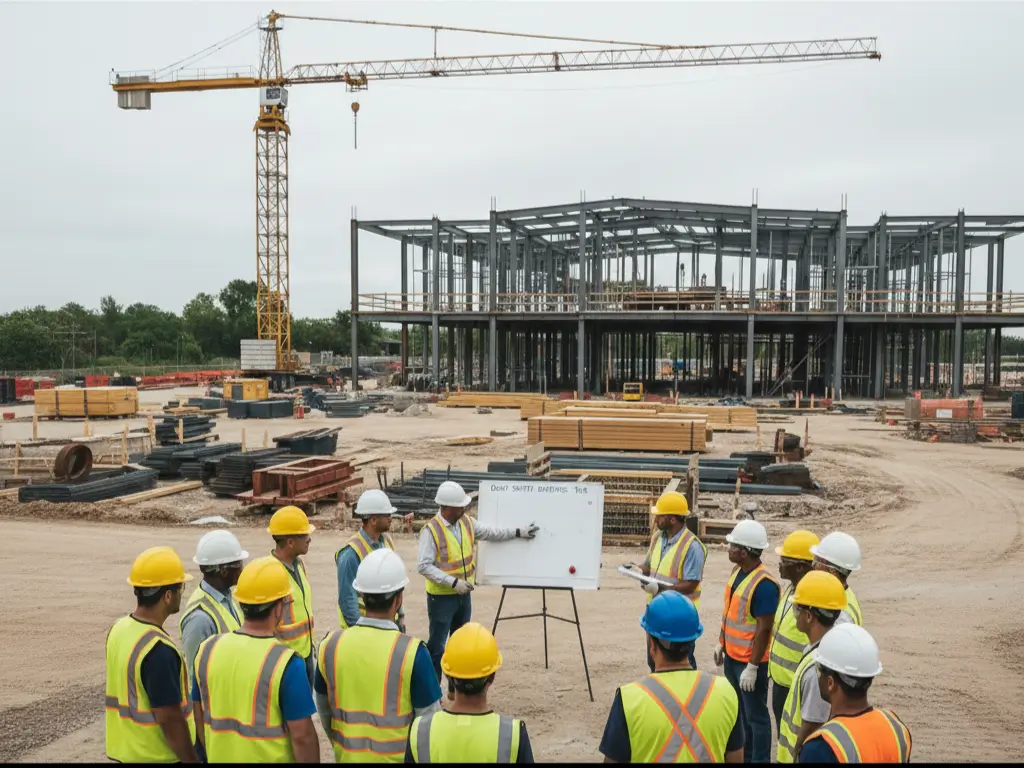
Too many toolbox talks are rushed, recycled, or read verbatim from outdated templates. Workers zone out, supervisors check boxes, and real safety risks go unaddressed. The result? Complacency, near-misses, and preventable injuries.
The difference between a wasted 10 minutes and a life-saving conversation lies in relevance, engagement, and follow-through. The best toolbox talk safety meeting topics aren’t generic—they’re targeted, timely, and tied directly to the work being done today.
This guide breaks down proven topics that resonate, reduce incidents, and build a culture where safety is part of the workflow—not an interruption.
1. Hazard Recognition: The Foundation of Every Safety Talk
Hazard recognition isn’t a one-time lesson—it’s a daily skill. A strong toolbox talk starts by asking: What could go wrong here, right now?
Instead of lecturing, use visual prompts: - Show a photo of the current worksite - Ask crew members to point out three hazards they see - Discuss how those hazards could escalate
Real example: On a roofing crew, a talk focused on edge protection. The supervisor laid out a roll of improperly secured netting and asked, “Would you trust this with your life?” The visual stuck more than any rulebook quote.
Common mistake: Presenting hazards in isolation. Pair each hazard with a real-world outcome. Not “falling objects,” but “a wrench dropped from 20 feet hits concrete and ricochets into a worker’s leg.”
Workflow tip: Rotate responsibility. Let different team members lead hazard ID weekly. It builds ownership and reveals blind spots.
2. Fall Protection: Still the #1 Killer in Construction
Falls account for nearly 40% of construction fatalities annually. Yet many toolbox talks treat fall protection as routine—boring, repetitive, and disconnected from actual conditions.
A high-impact fall protection talk should cover: - Proper anchor point selection (not just “use one”) - Harness inspection checklist (buckles, webbing, D-rings) - Fall clearance distance (how far you’ll drop before arrest) - Rescue planning (how to respond after a fall)
Practical drill: Have workers demonstrate donning and adjusting their harness in under 90 seconds. Time them. Mistakes slow them down—this reveals gaps fast.
Limitation to address: Many workers assume guardrails or fall nets eliminate risk. Emphasize that these are last lines of defense—planning and awareness come first.
Use case: On a steel erection crew, a talk focused on temporary work platforms. They reviewed manufacturer specs, load limits, and edge protection—then walked the actual platform to verify compliance.
3. Hand and Power Tool Safety: Small Tools, Big Risks
Hand and power tools cause over 100,000 injuries per year. Yet they’re often dismissed as “routine” or “low risk.” A toolbox talk that cuts through this complacency focuses on real-world misuse.
Key discussion points: - Using the right tool for the job (e.g., screwdriver as chisel) - PPE requirements (gloves, eye protection, hearing) - Cord management and extension cord ratings - Lockout/tagout for battery-powered tools
Common mistake: Assuming all tools are inspected daily. Reality? Many crews skip checks unless prompted. Make it routine: “Before you plug it in, inspect it.”
Example: A plumbing crew held a talk after a near-miss with a reciprocating saw. The blade broke and ricocheted into a wall. The talk reviewed blade selection, secure clamping, and body positioning—then all saws were inspected on the spot.
4. Electrical Safety: Hidden Dangers Everyone Overlooks
Electrical hazards aren’t just for electricians. Laborers, operators, and welders face risks daily—from damaged cords to underground line strikes.
Effective topics include: - Recognizing damaged insulation or cracked plugs - GFCI requirements on wet or damp sites - Safe distances from overhead lines - Grounding practices for temporary power setups
Practical tip: Bring in a damaged cord or outlet. Ask workers to identify the flaws. This makes the abstract concrete.
Real-world case: A landscaping crew avoided a serious incident after a talk on underground utilities. They called 811 before digging—turned out a 12kV line was six inches below surface.
Limitation: Many workers assume “low voltage = safe.” Emphasize that even 120V can be lethal under wet conditions or across the chest.
5. Confined Space Hazards: More Than Just “Small Spaces”
Confined spaces kill quickly—through lack of oxygen, toxic gases, or engulfment. But confusion over what qualifies as “confined” leads to dangerous assumptions.
Clarify the OSHA definition: - Limited entry/exit - Not designed for continuous occupancy - May contain hazards (atmospheric, mechanical, engulfment)
Use case: A wastewater crew held a talk before entering a pump vault. They reviewed permit requirements, gas monitoring, attendant roles, and retrieval systems. They even tested comms between entry and surface.
Common mistake: Assuming a space is “safe” because it’s been entered before. Conditions change. Always test atmosphere first.
Workflow tip: Keep a confined space log. Record entries, conditions, and issues. Review it monthly during safety meetings.
6. Lifting and Material Handling: Prevent Chronic Injuries
Back injuries don’t just happen in dramatic lifts—they accumulate. A toolbox talk on material handling should address both technique and planning.
Focus areas: - Team lifting coordination (one leader calling moves) - Use of mechanical aids (dollies, hoists, forklifts) - Proper gripping and posture - Load stability (securing materials for transport)
Example: A framing crew reduced back strain after a talk on panel handling. They started using vacuum lifters for large sheathing sheets—cutting manual effort by 70%.
Practical drill: Simulate a lift with a weighted object. Film it. Review posture, balance, and communication.
Limitation: PPE like back belts create false confidence. Stress that no belt prevents injury—technique and tools do.
7. Situational Topics: Tailor Talks to Real Events
The most effective toolbox talks respond to real-time conditions: - Weather changes (heat, rain, wind) - New equipment or subcontractors on site - Recent near-misses or incidents - Shift changes or overtime fatigue
Example: After a heatwave, a paving crew held a talk on heat stress. They reviewed symptoms, hydration rules, and buddy checks. They also adjusted work hours to avoid peak heat.
Workflow tip: Keep a “talk trigger” list: - First rain after dry spell (slip hazards) - Night shift start (fatigue, visibility) - Crane mobilization (exclusion zones)
This ensures relevance without last-minute scrambling.
8. Leading vs. Lagging Indicators: Measure What Matters
Most sites track lagging indicators—incidents, injuries, downtime. But leading indicators predict risk before harm occurs.
Use toolbox talks to build awareness of: - Near-miss reporting rates - PPE compliance audits - Safety observation participation - Training completion
Practical move: Share a weekly safety dashboard. Not to shame—but to celebrate progress. “Last week, we reported 12 near-misses. That’s 12 potential injuries caught early.”
Limitation: Data alone doesn’t change behavior. Pair metrics with stories. “Here’s what someone almost did—and how they caught it.”
9. Psychological Safety: Speaking Up Without Fear
A site can have perfect equipment and procedures—but if workers won’t speak up, safety breaks down.
Address: - How to challenge unsafe acts respectfully - Supervisor response to concerns (no retaliation) - Anonymous reporting options - Mental fatigue and distraction
Real case: A steelworker noticed a crane cable fraying but hesitated to speak—until a talk emphasized that “anyone can stop work.” He reported it. The lift was halted. Cable replaced.
Workflow integration: Start each talk with, “Has anything felt off this week?” Make silence the exception.
10. Closing the Loop: From Talk to Action
The biggest flaw in toolbox talks? No follow-up. A topic is discussed, signatures collected, and nothing changes.
Fix it with action rules: - Assign one safety action per talk (e.g., inspect all ladders) - Verify completion within 24 hours - Review previous actions at the start of the next meeting
Example: After a talk on fire extinguishers, a crew checked every unit on site. Three were expired. Replaced same day.
Pro tip: Use a shared board or app to track actions. Visibility drives accountability.
Toolbox talks shouldn’t be compliance theater. They’re your frontline defense against injury, downtime, and culture decay. Pick topics that reflect real risks, engage crews with practical examples, and always close the loop with action. Do that, and your 10-minute meeting becomes the most important part of the shift.
FAQ
What should you look for in Top Toolbox Talk Safety Meeting Topics for Real-World Sites? Focus on relevance, practical value, and how well the solution matches real user intent.
Is Top Toolbox Talk Safety Meeting Topics for Real-World Sites suitable for beginners? That depends on the workflow, but a clear step-by-step approach usually makes it easier to start.
How do you compare options around Top Toolbox Talk Safety Meeting Topics for Real-World Sites? Compare features, trust signals, limitations, pricing, and ease of implementation.
What mistakes should you avoid? Avoid generic choices, weak validation, and decisions based only on marketing claims.
What is the next best step? Shortlist the most relevant options, validate them quickly, and refine from real-world results.